Scripture: John 3:1–3 (NKJV)
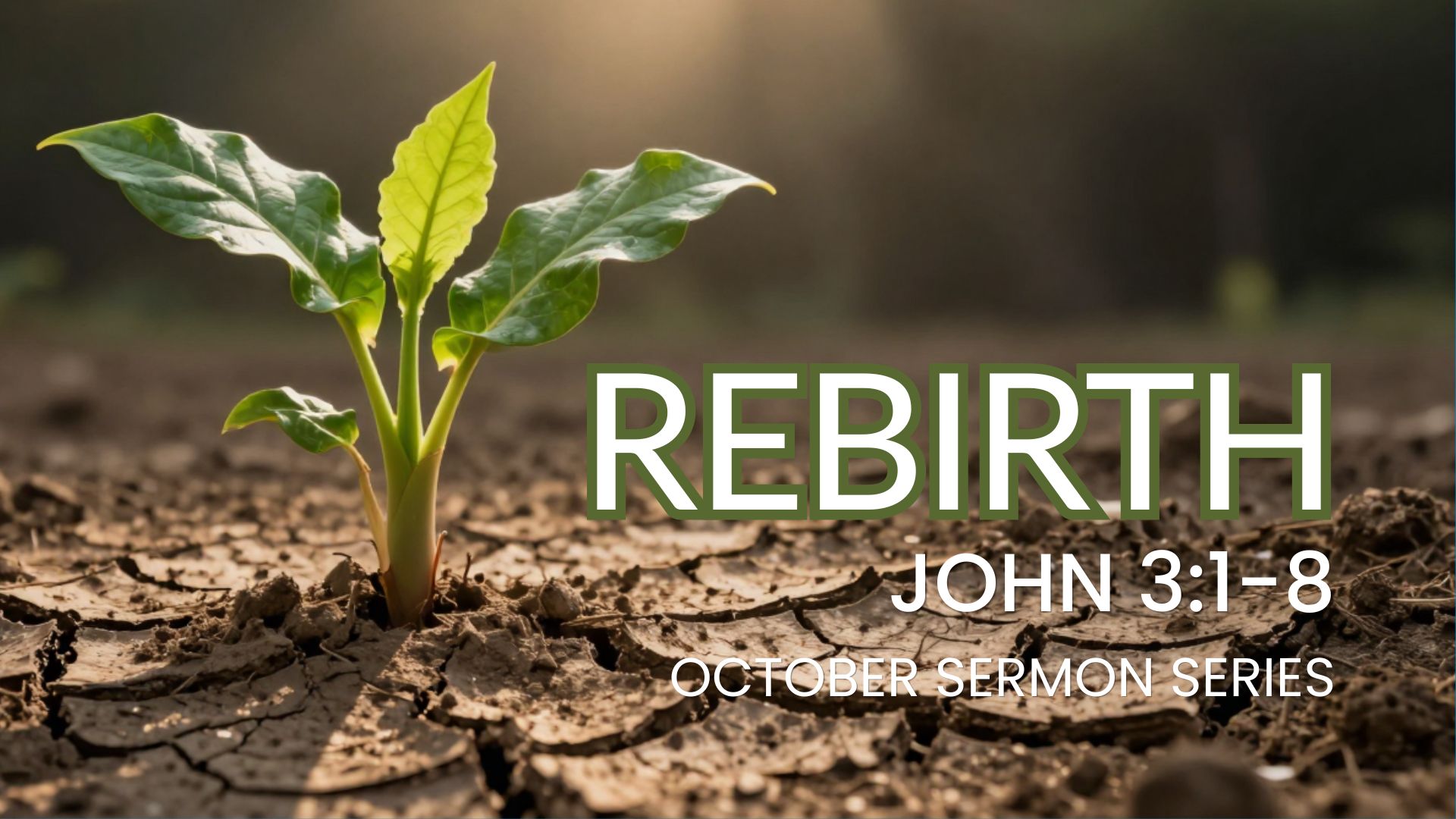
Series: Rebirth — Part 1 of 3
Lily Baptist Church | Tarrant, Alabama
2026 Vision: All Things New
2 Corinthians 5:17 (NKJV)
“Therefore, if anyone is in Christ, he is a new creation; old things have passed away; behold, all things have become new.”
Declaration: “I’m becoming who God wants me to be.”
Throughout 2026, we are challenging ourselves to:
Believe — Trust God, trust the process, hear God clearly, and respond in worship.
Belong — Honor God, honor yourself, honor others, and create an environment for healing.
Become — Represent God everywhere, be the light in the room, and live as an ambassador for Christ.
Series Introduction: Rebirth
John 3:1–3 (NKJV)
“There was a man of the Pharisees named Nicodemus, a ruler of the Jews. This man came to Jesus by night and said to Him, ‘Rabbi, we know that You are a teacher come from God; for no one can do these signs that You do unless God is with him.’ Jesus answered and said to him, ‘Most assuredly, I say to you, unless one is born again, he cannot see the kingdom of God.’”
The Rebirth series takes us into one of the most important conversations recorded in Scripture: the conversation between Jesus and Nicodemus in John 3.
For three Sundays, we will examine this encounter as we explore the transforming work God desires to do:
In us.
Through us.
Around us.
The goal is to break the limits of our spiritual commitment.
It is possible to believe in God while still placing limits on how far we are willing to go with God.
It is possible to attend church but resist transformation.
It is possible to know Scripture but remain spiritually stagnant.
It is possible to have religion without experiencing rebirth.
Nicodemus helps us understand this because he wasn’t spiritually ignorant. He was educated, respected, religious, successful, and influential.
Yet Jesus told him:
“You must be born again.”
This first message challenges us to examine three different identities:
A Natural Identity
A Divine Identity
A Kingdom Identity
Understanding each one can help us break the limits of our spiritual commitment.
1. A Natural Identity
John 3:1 (NKJV)
“There was a man of the Pharisees named Nicodemus, a ruler of the Jews.”
Nicodemus was somebody.
He was a Pharisee—a member of one of the leading religious groups among the Jews. The Pharisees were known for their strict commitment to the law.
He was also a ruler of the Jews, a member of the Sanhedrin.
Nicodemus had status.
He had wealth.
He had influence.
He had political power.
He had religious credentials.
He was important.
By the standards of his world:
Nicodemus was somebody.
But here is something we should remember:
Everybody is somebody.
The important question is:
Who are you?
How Do You Define Yourself?
We all develop identities based on how we see ourselves and how others see us.
You might define yourself as:
Hardworking.
Independent.
Successful.
Popular.
A businessman or businesswoman.
Smart.
Attractive.
Wealthy.
Strong.
A boss.
A king.
A queen.
A man’s man.
A phenomenal woman.
Maybe your identity comes from your neighborhood.
Maybe it comes from your career.
Maybe it comes from your education.
Maybe it comes from your family name.
Maybe it comes from your accomplishments.
Maybe it comes from your financial status.
There is nothing inherently wrong with recognizing the qualities, experiences, and accomplishments that make us who we are.
The problem comes when our natural identity becomes the limit of our spiritual identity.
Your natural identity may actually be holding you back spiritually.
When “Who I Am” Keeps Me From Who God Wants Me to Become
Sometimes we become so invested in who we have been that we resist who God is calling us to become.
“I’m independent. I don’t need anybody.”
“I’ve always been this way.”
“That’s just who I am.”
“Nobody tells me what to do.”
“I’ve accomplished too much to humble myself.”
“I already know enough.”
These attitudes can create spiritual limits.
Rebirth requires us to recognize that no earthly identity is more valuable than our identity in Christ.
Paul understood this.
Philippians 3:3–11 (NKJV)
“For we are the circumcision, who worship God in the Spirit, rejoice in Christ Jesus, and have no confidence in the flesh, though I also might have confidence in the flesh. If anyone else thinks he may have confidence in the flesh, I more so: circumcised the eighth day, of the stock of Israel, of the tribe of Benjamin, a Hebrew of the Hebrews; concerning the law, a Pharisee; concerning zeal, persecuting the church; concerning the righteousness which is in the law, blameless. But what things were gain to me, these I have counted loss for Christ. Yet indeed I also count all things loss for the excellence of the knowledge of Christ Jesus my Lord…”
Paul had an impressive natural identity.
He had religious credentials.
He had heritage.
He had education.
He had status.
He had zeal.
Yet after encountering Christ, Paul understood that none of those things compared with knowing Jesus.
He was willing to count everything else as loss because he had discovered something in Christ that the world could never give him.
He found godliness.
He found holiness.
He found righteousness.
He found eternity.
He found the pathway to resurrection and eternal life.
Your accomplishments may be valuable.
Your education may be valuable.
Your career may be valuable.
Your reputation may be valuable.
But none of those things can replace a relationship with Jesus Christ.
At some point, every one of us must recognize:
I must be born again.
Questions for Reflection
- If someone asked, “Who are you?” what are the first five things you would say about yourself?
- How many of those answers describe your natural identity, and how many describe your identity in Christ?
- Is there an identity, accomplishment, reputation, title, or status that has become too important to you?
- Have you ever used the phrase “That’s just who I am” to excuse something God may actually want to change?
- What part of your natural identity might be limiting your spiritual growth?
- Paul considered knowing Christ more valuable than his previous accomplishments. What would that attitude look like in your life?
- Who might God be calling you to become that your current self-image is resisting?
This Week’s Challenge: Examine Your Identity
Make two columns on a sheet of paper.
Title the first:
“How I Usually Define Myself.”
Write down the roles, accomplishments, relationships, personality traits, labels, and experiences you normally use to describe yourself.
Title the second:
“Who I Am in Christ.”
Spend time in Scripture identifying what God says about you.
Then ask:
“Have I allowed my natural identity to become more important than my identity in Christ?”
Pray for the courage to release any identity that is preventing you from becoming who God wants you to be.
2. A Divine Identity
John 3:2 (NKJV)
“This man came to Jesus by night and said to Him, ‘Rabbi, we know that You are a teacher come from God; for no one can do these signs that You do unless God is with him.’”
The story begins by telling us who Nicodemus was.
But Nicodemus came to Jesus because he recognized something about who Jesus was.
Nicodemus identifies three things:
- Rabbi
- Teacher come from God
- Signs from God
Each description reveals something Nicodemus was beginning to recognize about Jesus.
“Rabbi”
Rabbi was a title used to address and honor Jewish teachers.
Think about the significance of Nicodemus using this title.
Nicodemus was a Pharisee.
He was a ruler.
He was a respected religious leader.
Jesus would later refer to Nicodemus as “the teacher of Israel.”
Yet Nicodemus approaches a carpenter’s son from Galilee and calls Him:
Rabbi.
That communicates respect.
Honor.
Recognition.
Nicodemus recognized the depth and authority of Jesus’ teaching.
“A Teacher Come From God”
Nicodemus goes further.
Jesus isn’t simply another teacher.
He says:
“You are a teacher come from God.”
He recognizes divine authority in Jesus.
Something about Jesus cannot be explained naturally.
His teaching is different.
His authority is different.
His power is different.
Something divine is happening.
“No One Can Do These Signs”
Nicodemus points to the evidence:
“for no one can do these signs that You do unless God is with him.”
He recognized God’s activity by paying attention to what was happening around Jesus.
That presents us with an important spiritual challenge:
Can we recognize when God is moving?
Learn to Recognize Divine Intervention
God is working around us, but we have to learn how to identify His activity.
Sometimes we pray for God to move and then fail to recognize the answer when He does.
Sometimes we call something coincidence when it may actually be confirmation.
Sometimes God places the same concern on the hearts of several people.
Sometimes God prepares someone for an assignment before anyone asks them to serve.
Sometimes God opens a door at precisely the right moment.
Sometimes prayers, people, opportunities, resources, and timing begin coming together in ways we could not have orchestrated ourselves.
We should learn to stop and say:
“God is moving.”
As the sermon emphasized concerning Lily Baptist Church, there have been moments when people were approached about serving only to discover that God had already been dealing with them about the same area.
There have been people expressing concerns or ideas without knowing those same matters were already subjects of prayer.
Those moments encourage us to pay attention.
Confirmation.
Divine intervention.
Evidence that God is working among His people.
The more we recognize God’s activity, the more confident we become in trusting Him.
And when we start looking for God, we may discover that He has been moving in more places than we realized.
Questions for Reflection
- What convinced Nicodemus that there was something different about Jesus?
- Do you primarily recognize Jesus as someone you know about, or as Lord with divine authority over your life?
- When was the last time you recognized something happening in your life as God’s intervention?
- Have you ever prayed for something and then failed to recognize God’s answer because it didn’t come the way you expected?
- Where do you currently see evidence that God is moving at Lily Baptist Church?
- What confirmations have you experienced that caused you to believe God was directing you?
- Are you actively looking for God’s movement, or are you waiting for something spectacular before you acknowledge Him?
- How would your faith change if you became more intentional about recognizing God’s activity around you?
This Week’s Challenge: Look for God
For the next seven days, begin every morning with this prayer:
“Lord, help me recognize where You are working today.”
Then pay attention.
Look for divine appointments.
Look for answered prayers.
Look for unexpected opportunities.
Look for confirmation.
Look for people God places in your path.
Look for ways God may be calling you to serve.
At the end of each day, write down at least one place where you believe you saw evidence of God’s activity.
Don’t just ask God to move.
Train yourself to recognize when He does.
3. A Kingdom Identity
John 3:3 (NKJV)
“Jesus answered and said to him, ‘Most assuredly, I say to you, unless one is born again, he cannot see the kingdom of God.’”
Nicodemus has impressive credentials.
He has recognized something divine about Jesus.
But Jesus tells him:
There is still more.
Nicodemus could see religion.
He could see status.
He could see accomplishments.
He could see miracles.
But Jesus tells him there is something he cannot see without rebirth.
The kingdom of God.
There is something more God has for Nicodemus than anything he has already experienced.
But seeing it requires transformation.
Rebirth Changes What You Can See
Jesus said:
“Unless one is born again, he cannot see the kingdom of God.”
Paul describes spiritual blindness this way:
2 Corinthians 4:3–4 (NKJV)
“But even if our gospel is veiled, it is veiled to those who are perishing, whose minds the god of this age has blinded, who do not believe, lest the light of the gospel of the glory of Christ, who is the image of God, should shine on them.”
The light can be shining while someone remains unable to see it.
God can be revealing Christ while a spiritually blinded person misses what God is doing.
God can be revealing His kingdom while someone remains consumed with the world.
This is why rebirth matters.
Without being born again, you cannot see the kingdom.
And even after salvation, our level of spiritual commitment affects how attentively we recognize and participate in kingdom life.
There are things we may miss when we insist on seeing everything only through natural eyes.
What Are You Missing?
The sermon challenges us to consider whether spiritual limitations are preventing us from seeing:
Kingdom wealth.
Not merely material possessions, but the spiritual riches available through Christ.
Kingdom peace.
A peace that does not depend on everything around us going right.
Kingdom purpose.
Understanding that your life has meaning beyond personal success.
Kingdom protection.
Recognizing God’s presence and care over your life.
Kingdom relationships.
Connections God uses to strengthen, challenge, and position us.
Kingdom assignments.
The work God has uniquely prepared us to do.
Kingdom opportunities.
Doors to serve, grow, give, witness, lead, and make a difference for God’s glory.
Jesus tells Nicodemus that rebirth allows him to see differently.
Rebirth Gives You a New Family
Being born again doesn’t simply change where you will go when you die.
It changes who you are right now.
You become part of God’s family.
You are no longer defined merely by your natural identity.
You belong to the King.
You have access to the Father.
You can pray.
You can seek God’s grace.
You can experience God’s mercy.
You can participate in God’s work.
You can live according to kingdom values while you are still here on earth.
The sermon gives us a simple declaration:
“I’m in God’s family.”
Think about what that means.
You are a child of the King.
You belong to a royal priesthood.
You are part of a holy nation called to show God’s praises to the world.
Your ultimate citizenship is not defined merely by where you were born naturally.
Rebirth gives you a kingdom identity.
So we can declare:
“Heaven is my home.”
Don’t Settle for Seeing Only the Natural
Nicodemus had achieved things many people would have admired.
But Jesus was showing him that there was more.
More than status.
More than wealth.
More than religion.
More than political influence.
More than being respected by people.
There was a kingdom Nicodemus needed to see.
And there was a rebirth he needed to experience.
The same invitation confronts us.
God wants to do more in us.
God wants to do more through us.
God wants to do more around us.
But we cannot keep placing spiritual limits on a God who is calling us into transformation.
You must be born again.
Questions for Reflection
- What do you think Jesus means when He says a person must be born again to “see the kingdom of God”?
- What are you able to see differently now because of your relationship with Christ?
- Which area do you most need to recognize right now: kingdom peace, purpose, relationships, assignments, opportunities, or another area?
- Could God already be providing an opportunity that you have not recognized spiritually?
- How does viewing yourself as a member of God’s family change the way you think about yourself?
- Are you living primarily according to the values of the world around you or according to the values of God’s kingdom?
- What spiritual limitation might God be asking you to break during this Rebirth series?
- If you truly believed you were a child of the King, what would change about the way you pray, worship, serve, and face difficulties?
This Week’s Challenge: Live From Your Kingdom Identity
Every morning this week, declare:
“I’m in God’s family.”
“I’m a child of the King.”
“Heaven is my home.”
Then ask God:
“What do You want me to see today that I have been missing?”
Look specifically for one kingdom opportunity.
It may be an opportunity to serve.
To forgive.
To encourage.
To give.
To pray.
To witness.
To lead.
To reconcile.
To help.
To obey.
When God allows you to see the opportunity, respond to it.
Rebirth isn’t simply about seeing differently.
It should lead us to live differently.
Bringing the Message Together
Nicodemus came to Jesus with an impressive résumé.
But Jesus showed him that his résumé wasn’t enough.
He had a natural identity.
He was a Pharisee, ruler, leader, and man of status.
He recognized Jesus’ divine identity.
He saw evidence that Jesus was a teacher sent from God and that God’s power was working through Him.
But Jesus invited Nicodemus into something greater:
A kingdom identity.
John 3:3 (NKJV)
“Most assuredly, I say to you, unless one is born again, he cannot see the kingdom of God.”
That’s the message of rebirth.
Your natural identity tells you who you have been.
Jesus’ divine identity tells you who He is.
Your kingdom identity reveals who you can become through Him.
This is exactly where our 2026 vision meets the message:
Believe — Recognize who Jesus is and place your faith in Him.
Belong — Understand that through Christ you have been brought into God’s family.
Become — Allow God to transform you into the person He created and called you to be.
“I’m becoming who God wants me to be.”
Personal Rebirth Inventory
Before moving into Part 2 of this series, spend some time with these questions:
Natural Identity:
What part of who I have been is making it difficult for me to become who God wants me to be?
Divine Identity:
Where is Jesus revealing His authority and activity in my life right now?
Kingdom Identity:
What might God be trying to show me that requires deeper faith and spiritual commitment to see?
Finally, ask yourself:
“Where have I placed limits on my commitment to God?”
Don’t rush your answer.
The goal of Rebirth isn’t merely to finish three sermons.
The goal is transformation.
Invitation: You Must Be Born Again
Religion alone isn’t enough.
Status isn’t enough.
Church attendance isn’t enough.
Being a good person isn’t enough.
Knowing Christian language isn’t enough.
Jesus told a highly religious man:
“You must be born again.”
God created you and loves you, but sin separates us from God. God’s love is greater than our sin, so He sent His Son, Jesus Christ, to pay the penalty for our sins.
Jesus died.
Jesus was buried.
Jesus rose again.
Through faith in Him, we can receive forgiveness, new life, and a new identity.
If you are ready to place your faith in Jesus Christ, you can pray:
“God, thank You for creating me and loving me. I realize I have sinned and have been separated from You. I ask You to forgive me for my sins. I believe You sent Your Son Jesus to die and pay the penalty for my sins. I believe He rose from the dead according to the Bible. I confess Jesus as Lord of my life and Savior of my soul. I ask that You send Your Holy Spirit into my heart. In Jesus’ name, Amen.”
If you have prayed this prayer, let us know so that we can help you take your next steps in your relationship with Jesus Christ.
Remember:
You are not limited to who you used to be.
God is making all things new.
You can be born again.
You can see the kingdom.
You can become who God wants you to be.